CRCA History
CRCA has a long and storied history dating back more than one hundred years to 1898.
The New York Times archives includes articles that describe the club’s original founding and its activities ever since. There was even a point in time when the New York Times published results from the club’s races, such as this 1917 article describing the first annual Decoration Day handicap ten-mile bicycle road race on Pelham Parkway.
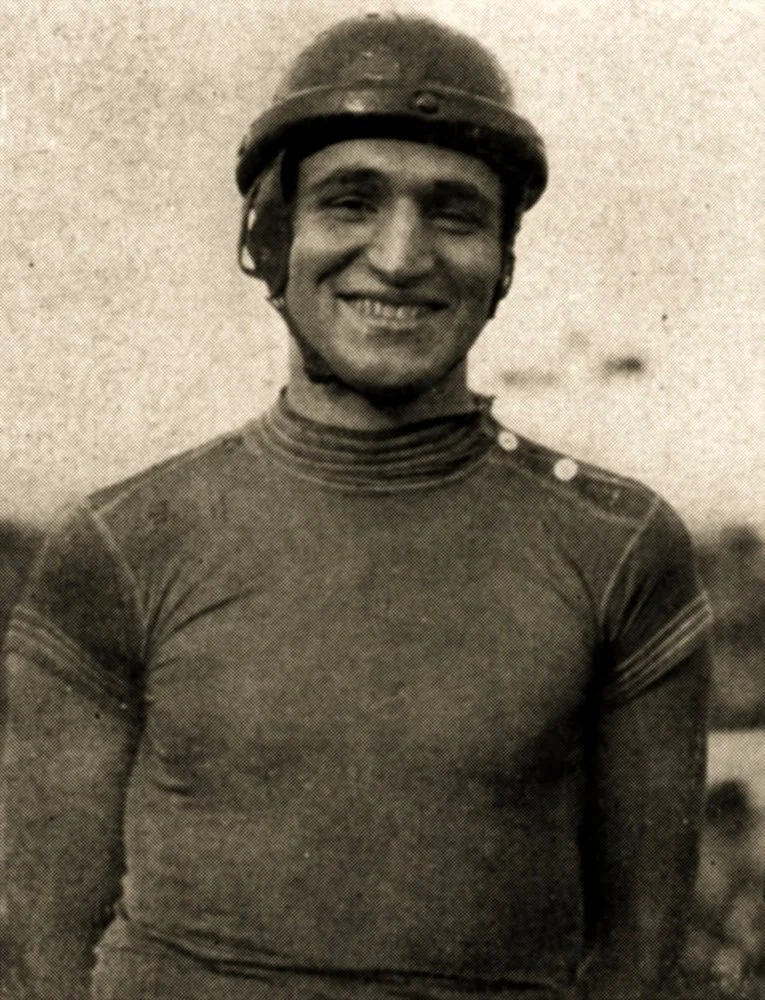
Less than a decade later, the Times would describe CRCA member Lou Maltese’s victory at the 100-mile Sesquicentennial bicycle racein Union City, NJ, where he set a new American record for the distance in 4 hours, 33 minutes, and 6 seconds. Following his successful years as a racer, Lou would go on to be a driving force behind CRCA in New York City, organizing the 75-mile Apple Lap through all five boroughs as well as organizing Olympic qualification trials in Central Park.
Even more recently the New York Times wrote about races that have long since disappeared from the race calendar, such as the 1970 Axel Swenson Memorial race, which started at 79th Street and East Drive and finished at 96th Street in Central Park. But even then, when races were able to crisscross Manhattan, it was far from easy to host races, as detailed in this 1978 article where CRCA's President Lou Maltese lamented “how can you attract people at 7 o’clock in the morning in Central Park.”
Despite these challenges, cycling in New York City has persevered. While Central Park and Kissena Velodrome may no long play host to the National Championships, as was the case in 1970, the Century Road Club Association continues to host races throughout the year, and thankfully we no longer have to rely on Times articles calling for “a few brave women and some older men too, equally brave” as part of our recruiting strategy (that same article takes note of the old Thanksgiving race in Central Park where the club gave away fifty turkeys).
CRCA Hall of Fame
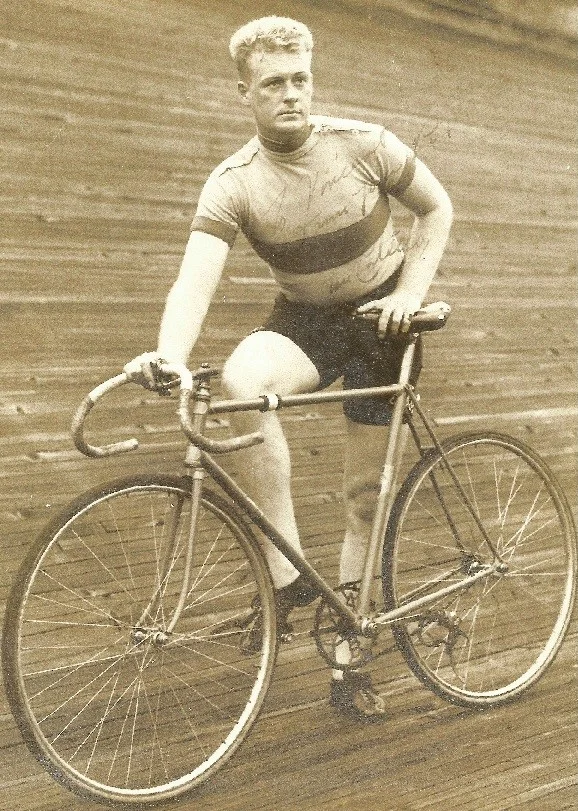
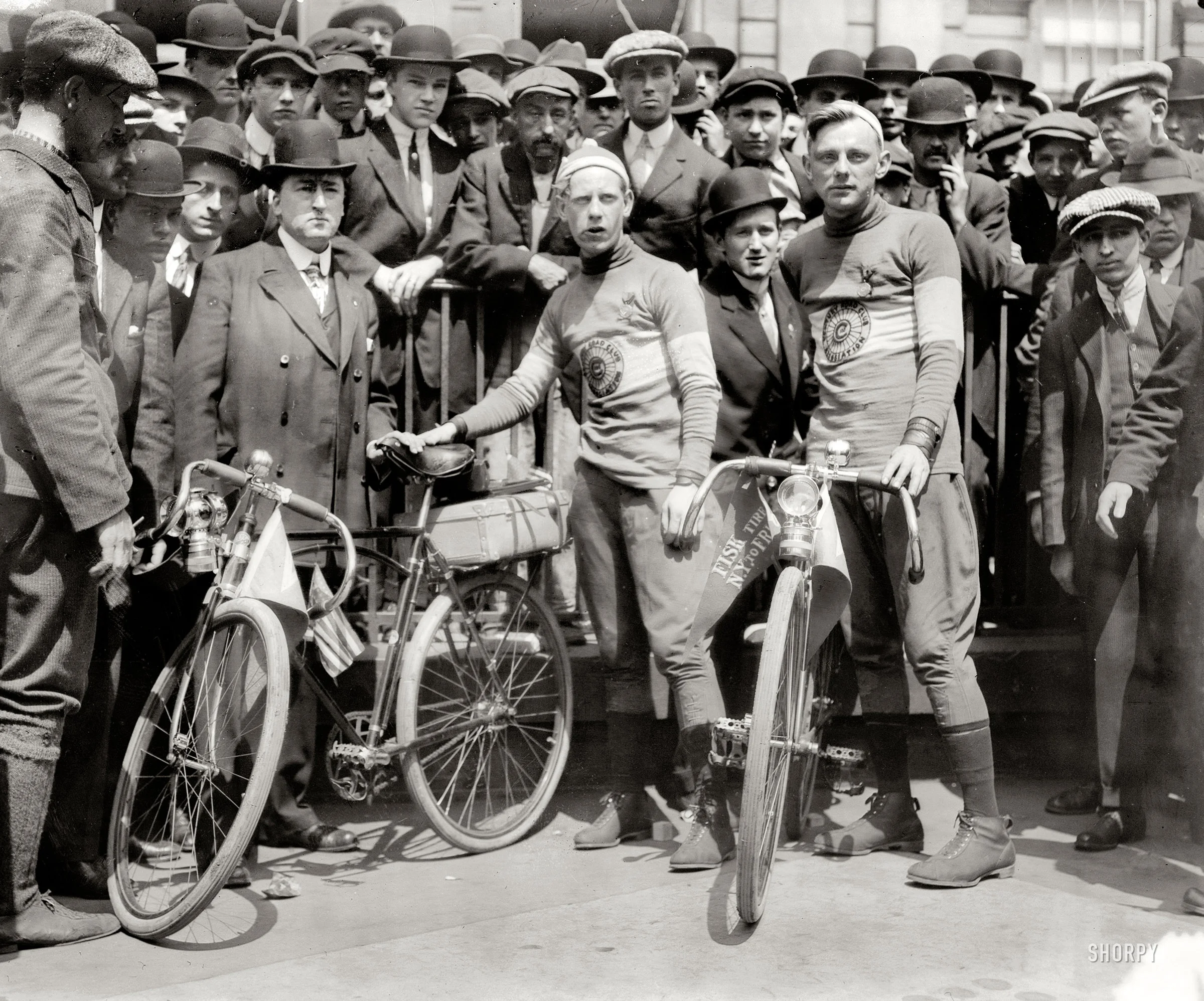
CRCA's First 100 Years
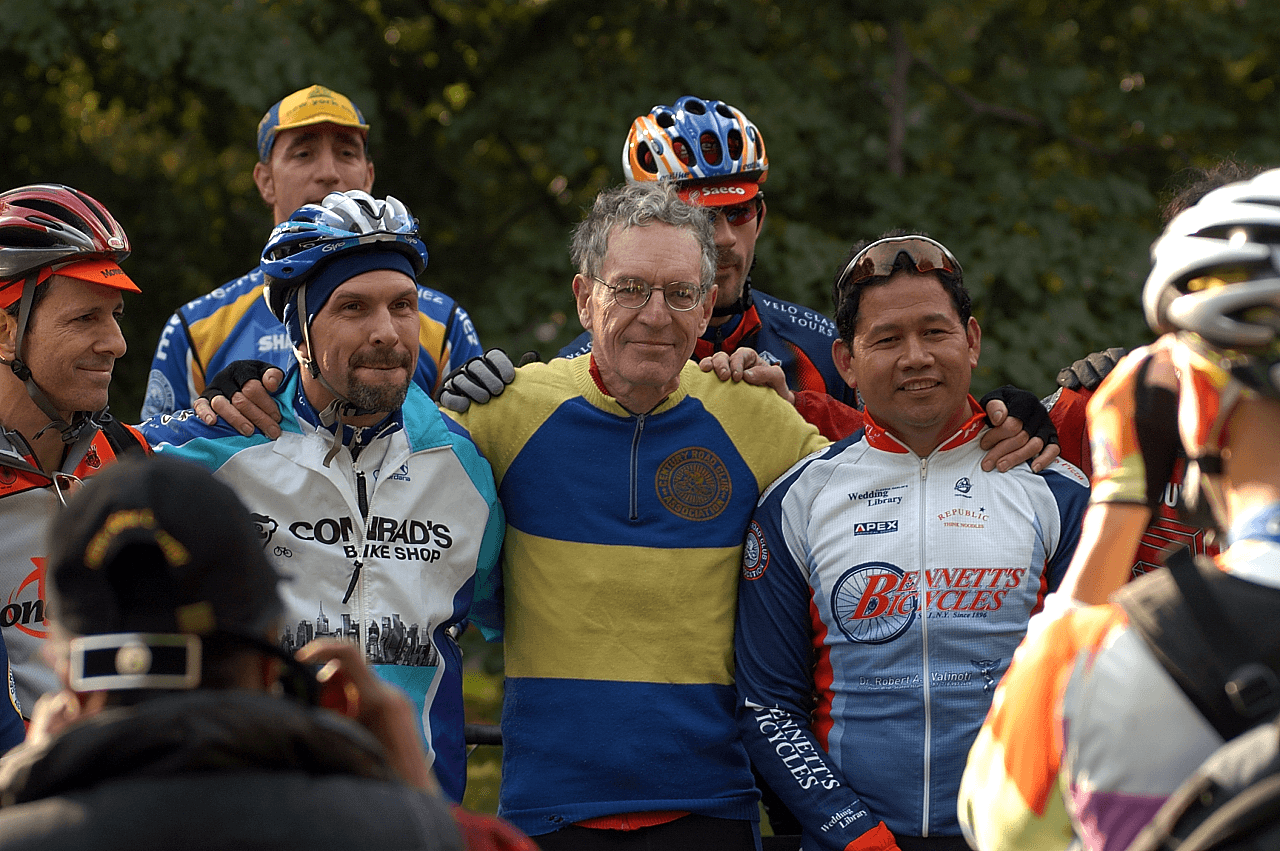
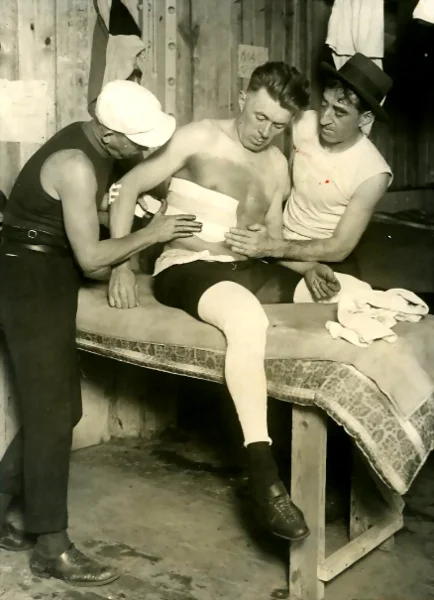
Peter J. Nye was commissioned by CRCA to write the following history of the club as an article for the newsletter to coincide with the 1998 CRCA Centennial celebration. Mr. Nye is also the author of Hearts of Lions: The Story of American Bicycle Racing, published in 1988. The article emphasizes the important role of Lou Maltese in the continued existence and development of CRCA. If there is interest in the history of CRCA, it will always lead back to Lou Maltese. He was the club for many years. He did everything. All club business at the club races in the 70’s and 80’s took place from the trunk of his huge Cadillac, which he parked on the walkway by the start-finish line. — Jim Boyd, 2004
CRCA, A CHARTER CLUB IN USA CYCLING, INC., SPANS A CENTURY
by Peter Joffre Nye
A familiar refrain for generations of restless riders standing on the starting line, typically with the summer sun striking like a hammer on an anvil, was the cry of officials pleading for the Century Road Club Association’s Lou Maltese. “Where’s Lou Maltese? We can’t start this race without Lou Maltese!”
It was as if the wizened man out checking on placement of road guards and other logistic details held the key for unlocking the mysteries of bicycle racing. At last he would hustle onto the road in front of the awaiting peloton. At his command, officials ordered riders to mount their bicycles. Finally the riders charged away, presenting a retina-saturating blur of vibrant colors.
Thousands of races over city streets and around parks began this way. Maltese, born in 1907 during the Presidency of Teddy Roosevelt, indeed prevailed as the key to bicycle races into Ronald Reagan’s administration. Maltese had earned a first-name basis with many of the men and women whose names remain printed in musty record books as champions, a word he pronounced in his idiomatic New Yorker way to rhyme with beans.
As cycling’s unique link to the sport’s robust era, Maltese helped the CRCA–and the sport–prevail through lean years to better times and the CRCA’s centenary celebration.
Today it’s easy to lose perspective of a 100-mile ride’s significance to cyclists of Maltese’s youth. Bicycles liberated men and women from relying on horses, or train schedules for individual transportation. A bicycle ride of 100 miles, cheerfully extolled as a century, represented achievement and a major improvement on 50 miles a day that stage coaches had driven from sunrise to sundown.
Celebrating the 100-mile ride inspired Chicago riders in June 1891 to organize the Century Road Club of America. Its organization coincided with introduction of the modern safety bicycle, equipped with equal-size wheels and chain drive on a diamond frame. Safety bicycles soon displaced the high-wheelers from the dirt roads of the day.
Belfast chemist John Dunlop invented pneumatic tires so his son could enjoy a softer ride on his new safety bicycle. These advancements piqued a national craze on both sides of the Atlantic. Newspapers and magazines, the only media of the late 19th century, heralded cycling as the Sport of the Nineties.
The CRC of A incorporated December 19, 1895 in Chicago as a national organization with local chapters that proliferated. Disputes flared, however, about how the central body shared dues. Friction led to a New York contingent breaking away in 1898 to form the Century Road Club Association. CRCA incorporated in 1898, the same year as New York City incorporated all five boroughs. CRCA’s members were amateur riders who came mostly from the five boroughs and Long Island. Some chapters extended as far south as Washington, DC. Census data indicates that the bicycle industry grew more than 1,500 percent during the 1890s. When CRCA incorporated, more than 300 manufacturers worked to meet consumer demand for men and women riders of all social strata.
Charles Dana Gibson, best known for his pen and ink sketches of American womanhood called the “Gibson Girl,” saw cycling as part of popular culture. When the medical profession cautioned of the dangers of bicycling for women, Gibson drew a clever sketch entitled, “Is Bicycling Bad for the Heart?” Gibson tweaked such caution–he apparently considered cycling beneficial to women and men alike.
After the turn of the century, however, consumer demand for bicycles abruptly plummeted as attention shifted to motorcycling and golfing. Clubs like the CRCA enthusiastically supported the joy of cycling. The January 1906 CRCA Bulletin boasted that the club’s Road Records Committee “shows conclusively that century riding is not a thing of the past and that it is still popular amongst cyclists all over the country.”
The Bulletin reported that 1905 concluded with H.T. Mayo leading the club with 50 centuries completed during his official annual tally of 10,115 miles. Mrs. C. B. Ruch set the standard for women with her 12 centuries. Considering that they all pedaled one-speed bicycles when America had a total of less than 150 miles of paved roads, the centuries of H.T. Mayo, Mrs. Ruch and others represented tenacity and a devotion to the wheel sport.
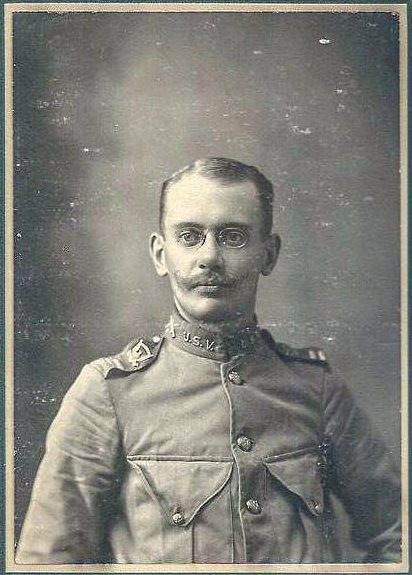
One CRCA cycling enthusiast, Adolph Jacobson, put the club in the record books in 1910 when he set a national record for the quarter-mile. A period photo shows Jacobson as a lean man of medium height with a neatly trimmed dark mustache. He equipped his bicycle with handlebars that swept back and carried a bell to warn pedestrians and horses of his arrival. Jacobson steadily took on a greater CRCA leadership role that reverberated through cycling.
Joseph Kopsky became another CRCA cyclist destined to leave his name on the record books. During the day, he worked as a steel worker who helped construct the Woolworth building. Located in Manhattan at the corner of Broadway and Park Place, the Woolworth building when it opened in 1913 stood 792 feet to claim the title of world’s tallest building.
Kopsky, whose routine lifting of heavy steel gave him a build like a lifeguard, also found time to ride and race his bicycle. On May 5, 1912, in Floral Park, NY, he set a new national record for 150 miles. That earned him a berth on the cycling team that went to the 1912 Stockholm Olympics. He competed in the 200-mile road race, an individual time trial around Lake Milar that began at 2 A.M. His road team came home with a bronze medal–the last medal that U.S. Olympic cyclists won for 72 years, until the 1984 Los Angeles Olympics.
World War I interrupted the Olympics until 1920 when Antwerp, Belgium, hosted them. Funding and selection of cyclists representing the United States set off a jurisdictional battle. Jacobson, CRCA’s financial secretary, played a vital role in the biggest American cycling dramas.
Jacobson and cycling officials of other New York-area clubs objected to the National Cycling Association, governing body of both professional and amateur racing, from selecting riders for the Antwerp Olympics when funding for transportation, food, and lodging, were left to the clubs. The 1920 Olympic cycling road team included the CRCA’s August Nagora. CRCA and nine other clubs did manage to raise the expenses. Jacobson and other club officials, however,, decided to break away from the NCA. They formed a new governing body devoted exclusively to amateur cyclists and recruited clubs across the country. They named it the Amateur Bicycle League of America.
The upstart ABLA incorporated in New York in 1921. To put its mark on the sport, leadership held its inaugural national championship late in the summer of 1921 in Washington, DC. Jacobson is credited with playing an instrumental role in establishing district championships to determine each district’s top three riders to compete in the national championship. At the 1922 ABL nationals in Atlantic City, the junior boys’ division, ages 14 and 15, was introduced. Charles Smithson of the CRCA won the title of first junior boys’ national champion.
Another Olympian from the CRCA was Victor Hopkins, who competed in the 1924 Paris Olympics. Soon after returning from France, Hopkins turned professional to race in the lucrative six-day winter indoor circuit that enjoyed a phenomenal hold in popularity. When the weather warmed, Hopkins also competed up and down the Eastern Seaboard in the glamorous but dangerous motorpace racing in which a cyclist paced at speed behind a motorcycle. In 1926 Hopkins won the national motorpace championship.
Maltese earned glory in June 1926 with a 100-mile national record in a race from Union City, NJ, to south Philadelphia. The next year Maltese set a 25-mile record in Mount Vernon, NY. In 1929 he turned professional to race motorpace events against pros like Hopkins.
The 1920s were a golden decade for American bicycle racing. One of Jacobson’s youthful amateur rivals, Frank Kramer, built a spectacular professional career. It included a world sprint championship and 18 national pro sprint titles that made him the best-paid athlete until Babe Ruth joined the Yankees.
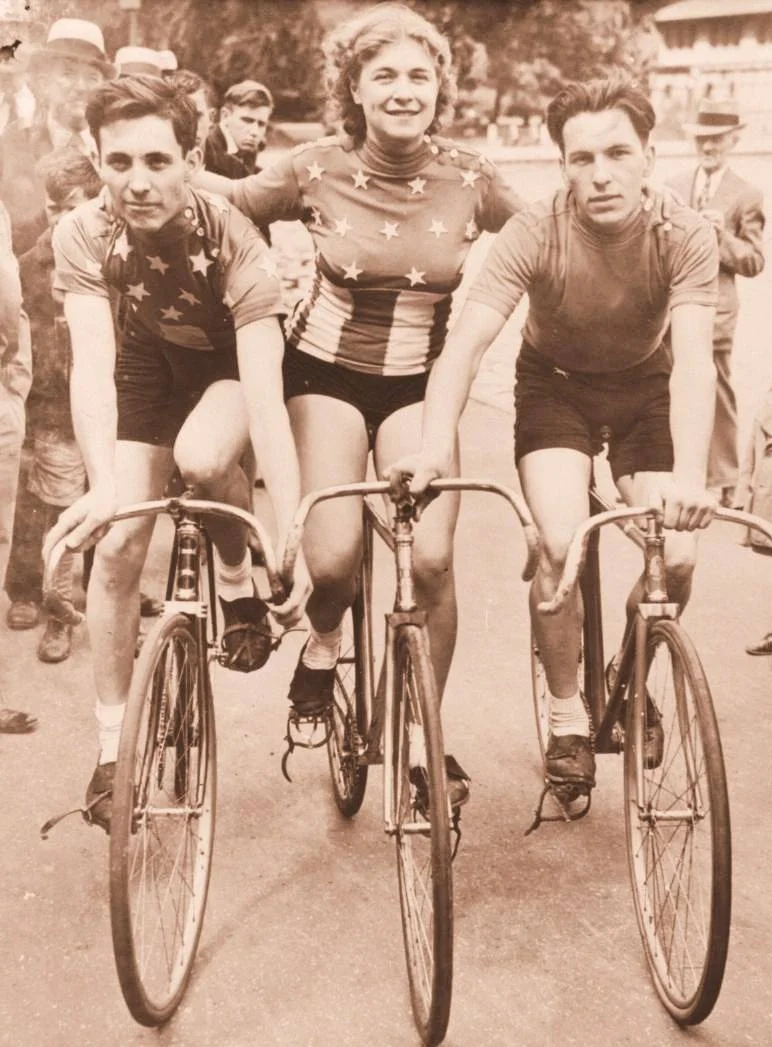
But the 1920s ended severely with the stock market crash plunging the 1930s into a depression. American cycling and Maltese’s career fell onto hard times. In 1937 Kopsky’s name again made news. He had trained his 15-year-old daughter, Doris Kopsky, to sprint on a racing bicycle he had built. She won the ABLA’s inaugural national cycling championship for girls, open to women of all ages, in Buffalo, NY. The CRCA’s Gladys Ruth Owens won the next ABLA Girls’ national title in Columbus, Ohio. (The championship remained Girls until 1954 when it was renamed Women’s national championship.)
American cycling diminished during the depression, then halted during World War II. When peace returned, the sport had suffered a loss of tradition and a devastating break in continuity. Maltese had retired from racing but stayed with the sport, devoting his energy to organizing races. He emerged as a leader of a small corps of dedicated volunteers endeavoring to keep the sport alive.
One of CRCA’s young racers of the 1950s who learned from Maltese was Al Toefield. A New York City police officer for 38 years, Toefield also served as ABLA president from 1967 to 1971. He worked with the Armed Forces Special Services program that gave athletes limited freedom to train on bases where they were stationed nationwide. Toefield persuaded Pentagon officials to organize an official U.S. Army Cycling Team for the public relations benefit, then had top riders such as John Howard and Dave Chauner enlist.
Toefield directed the ABLA team that went to the 1969 world championships in Brno, Czechoslovakia where Audrey McElmury levonas won the women’s world championship road race–becoming the first American to win the world road title. Two years later, Howard won the gold medal at the Pan American Games in Cali, Colombia.
Chauner, who had stood on his share of starting lines waiting for Lou Maltese to give the okay, won a bronze medal in the Cali Pan American Games. When he retired from racing, he co-founded U.S. Professional Racing Organization and the CoreStates US PRO Championship (renamed First Union US PRO Championship).
A century ago, cycling enthusiasts had organized the CRCA. It drew riders like Jacobson, Maltese, and Toefield. They rose to the challenges of leadership roles to keep the sport rolling. In 1976 the ABLA’s name changed to the U.S. Cycling Federation and, recently, to USA Cycling, Inc. All the rest is current events.
Past CRCA Boards
Serving on the CRCA Board is a demanding and oftentimes difficult task. The club and all of its members express their gratitude for those who have served on prior CRCA Boards.
BOARD OF DIRECTORS (2025)
President: Stephanie Luff
VP of Rider Development: Tara Parsons
VP of Racing: Maria-Cristina Gallagher
Secretary: Leslie Burnett
Treasurer: Rod Millot
Communications Director: Jennifer Poirier
Public Relations Director: Sarah Chubb Sauvayre
Membership Director: Carlos Petricioli
Marshal Director: Arihant Kalidindi
Director of Teams: Sarah Sanborn
Director of Open Racing: Alan Buday
Director of Advocacy: Mitchell Napolitano
BOARD OF DIRECTORS (2024)
President: Emily Singleton
VP of Rider Development: Tara Parsons
VP of Racing: Charlie Stein
Secretary: Josh Sakofsky
Treasurer: Mitchell Napolitano
Communications Director: Jennifer Poirier
Public Relations Director: Sarah Chubb Sauvayre
Membership Director (interim): Randy Locklair
Marshal Director: Max Haight
Director of Teams: Sarah Sanborn
Director of Open Racing: Alex Klafehn
Director of Advocacy: Phil Morel
BOARD OF DIRECTORS (2023)
President: Emily Singleton
VP of Rider Development: Tara Parsons
VP of Racing: Charlie Stein
Secretary: Josh Sakofsky
Treasurer: Mitchell Napolitano
Communications Director: David Shirzad
Public Relations Director: Sarah Chubb Sauvayre
Membership Director: Stephanie Luff
Marshal Director: Max Haight
Director of Teams: Jean-Luc Louis
Director of Open Racing: Alex Klafehn
Director of Advocacy: Nathan Brauer
BOARD OF DIRECTORS (2022)
President: Randy Locklair
VP of Rider Development: Tara Parsons
VP of Racing: Charlie Stein
Secretary: Josh Sakofsky
Treasurer: Mitchell Napolitano
Communications Director: David Shirzad
Membership Director: Emily Singleton
Marshal Director: Mart de Graaf
Director of Teams: Elizabeth Tobey
Director of Open Racing: Alex Klafehn
Director of Advocacy: Nathan Brauer
BOARD OF DIRECTORS (2021)
President: Kevin Hsieh
VP of Rider Development: Tara Parsons
VP of Racing: John D’Agostino
Secretary: Travis Torsky
Treasurer: Mitchell Napolitano
Communications Director: Emily Singleton
Public Relations Director: Euan Stevenson
Membership Director: Randy Locklair
Marshal Director: Evan Bauer
Director of Teams: Elizabeth Tobey
Director of Open Racing: Alex Klafehn
Director of Advocacy: Nathan Brauer
Board of Directors (2020)
President: Lucia Deng
VP of Rider Development: Tara Parsons
VP of Racing: Kevin Hsieh
Secretary: Travis Torsky
Treasurer: Mitchell Napolitano
Communications Director: Emily Singleton
Public Relations Director: Jeff Young
Membership Director: Randy Locklair
Marshal Director: John D’Agostino
Director of Teams: Sean Hill
Director of Open Racing: Alex Klafehn
Board of Directors (2019)
President: Lucia Deng
VP of Rider Development: Tara Parsons
VP of Racing: Kevin Hsieh
Secretary: Daniel Goldberg
Treasurer: Mitchell Napolitano
Communications Director: Elizabeth Tobey
Public Relations Director: Jeff Young
Membership Director: Randy Locklair
Marshal Director: Tony Pletcher
Director of Teams: Sean Hill
Director of Open Racing: Matthew Vandivort
Board of Directors (2018)
President: Gabrielle Fisher
VP of Rider Development: Tara Parsons
VP of Racing: Julius Quito
Secretary: Daniel Goldberg
Treasurer: Ken Edwards
Communications Director: Matthew Vandivort
Public Relations Director: Jeff Young
Membership Director: Randy Locklair
Marshal Director: Tony Pletcher
Director of Teams: Lucia Deng
Director of Open Racing: Ted Teyber
Board of Directors (2017)
President: Gabby Fisher
Vice President of Rider Development: Tara Parsons
Vice President of Racing: Julius Quito
Secretary: Fred David
Treasurer: Ken Edwards
Communications Director: Daniel Goldberg
Public Relations Director: Jeff Young
Membership Director: Madeleine Pascolini Campbell
Marshal Director: David Moss
Director of Teams: Hank Greenberg
Director of Open Racing: Ted Teyber
Board of Directors (2016)
President: Alexis Kraft
Vice President of Rider Development: Tara Parsons
Vice President of Racing: Gabrielle Fisher
Secretary: Fred David
Treasurer: Ken Edwards
Communications Director: David Wen Riccardi-Zhu
Public Relations Director: Russ Bogin
Membership Director: Randy Locklair
Marshal Director: Tomi Ketcham
Director of Teams: Robert Rakowitz
Director of Open Racing: Ted Teyber
Board of Directors (2015)
President: Liz Marcello
Vice President of Rider Development: Ann Marie Miller
Vice President of Racing: Matthew Vandivort
Secretary: David Carr
Treasurer: Ken Edwards
Communications Director: Lucia Deng
Public Relations Director: Lisa Kennish Vandivort
Membership Director: Randy Locklair
Marshal Director: Tomi Ketcham
Director of Teams: Alexis Kraft
Director of Open Racing: Joseph Grgic
Board of Directors (2014)
President: Jayson Jacobs
Vice President of Rider Development: Ann Marie Miller
Vice President of Racing: Liz Marcello
Secretary: David Carr
Treasurer: Ken Edwards
Communications Director: Lucia Deng
Public Relations Director: Roger Parmelee
Membership Director: Rob Duncker
Marshal Director: Josh Sakofsky
Director of Teams: Ashley Doane
Director of Open Racing: Joseph Grgic
Board of Directors (2013)
President: Rod Millott
Vice President of Rider Development: Scot Willingham
Vice President of Racing: Zak Abdullah
Secretary: Gina Rocco
Treasurer: Lisa Kennish
Communications Director: Lucia Deng
Public Relations Director: Harry Zernike
Membership Director: Rob Duncker
Marshal Director: Rob Weitzner
Director of Teams: David Carr
Director of Open Racing: Matthew Vandivort
Board of Directors (2012)
President: Rod Millott
Vice President of Rider Development: Scot Willingham
Vice President of Racing: Zak Abdullah
Secretary: Gina Rocco
Treasurer: Lisa Kennish
Communications Director: David Carr
Public Relations Director: Harry Zernike
Membership Director: Rob Duncker
Marshal Director: Rob Weitzner
Director of Teams: Sonny Bindra
Director of Open Racing: Matthew Vandivort
Board of Directors (2011)
President: Dave Jordan
Vice President of Rider Development: Scot Willingham
Vice President of Racing: Zak Abdullah
Secretary: Rod Millott
Treasurer: Matthew Vandivort
Communications Director: Chris Forsyth
Public Relations Director: Jen Saunders
Membership Director: Rob Duncker
Marshal Director: Rob Weitzner
Director of Teams: Chris Loudon
Director of Open Racing: Sonny Bindra
Board of Directors (2010)
President: Michael Green
Vice President of Rider Development: Tony Slokar
Vice President of Racing: David Bowen
Communications Director: Reed Albergotti
Treasurer: Wendy Nickerson
Public Relations Director: Jen Saunders
Secretary: David Greenberg
Membership Director: Chris Forsyth
Marshal Director: Sonny Bindra
Director of Teams: Cami Kornely
Director of Open Racing: Gabrielle Fisher